Over het MMRK

André Bulthé, De kosmische Christus, Le Christ cosmique, +- 1970, oil on canvas, 108 x 89 cm, courtesy MMRK

01.08 - 25.10.2026
tentoonstelling - MMRK - exposition
MAGNIFICA HUMANITAS, encycliek 2026 encyclique


naar meer menselijkheid
vers une plus grande humanité
owards greater humanity

basilique Nationale basiliek, 3° verdieping - 3° étage
Basiliekvoorplein 1, 1083 Ganshoren
Open: woe/mer/wed - zon/dim/sun  2 - 4 pm
www.mmrk.be
Instagram: mmrk_museum

NEDERLANDS  [continuer pour le texte en français - scroll down for english]

De encycliek *Magnifica Humanitas* van paus Leo XIV biedt een van de meest scherpzinnige theologische interpretaties van het digitale tijdperk en laat zien hoe de technologische transformaties de kern van de christelijke antropologie raakt en de mens voor een fundamentele keuze plaatst. In plaats van technologie te demoniseren, legt de paus de verafgode verdraaiingen ervan bloot: de logica van de macht, nieuwe onzichtbare vormen van slavernij, datakolonialisme en de transhumanistische verleiding om het vlees te overstijgen (robotisering).

Hedendaagse technologie is een spirituele beproeving die ofwel naar meer ontmenselijking (Babel) ofwel naar meer gemeenschap (Jerusalem) kan leiden. Tegenover de prestatiecultuur verkondigt het Magnificat de waardigheid van de nederigen en het primaat van de barmhartigheid. De passie-spiritualiteit vindt in deze tekst een unieke weerklank: het bewaken van het verwonde vlees, het herkennen van de nieuwe digitale gekruisigde en het ontwapenen van de macht door de logica van de kenosis (zichzelf ledigen door nederigheid).

Magnifica Humanitas is daarmee het manifest van een vernieuwd christelijk humanisme dat in staat is het digitale tijdperk te bewonen zonder erdoor gekoloniseerd te worden.

FRANÇAIS

L'encyclique *Magnifica Humanitas* du pape Léon XIV offre l'une des interprétations théologiques les plus perspicaces de l'ère numérique et montre comment les transformations technologiques touchent au cœur même de l'anthropologie chrétienne et placent l'homme face à un choix fondamental. Au lieu de diaboliser la technologie, le pape en dénonce les dérives idolâtriques : la logique du pouvoir, les nouvelles formes invisibles d’esclavage, le colonialisme des données et la tentation transhumaniste de transcender la chair (robotisation).
La technologie contemporaine est une épreuve spirituelle qui peut conduire soit à davantage de déshumanisation (Babel), soit à davantage de communion (Jérusalem). Face à la culture de la performance, le Magnificat proclame la dignité des humbles et la primauté de la miséricorde. La spiritualité de la Passion trouve dans ce texte un écho unique : veiller sur la chair blessée, reconnaître le nouveau crucifié numérique et désarmer le pouvoir par la logique de la kénose (se vider de soi par l’humilité).
Magnifica Humanitas est ainsi le manifeste d’un humanisme chrétien renouvelé, capable d’habiter l’ère numérique sans s’y faire coloniser.

ENGLISH

Pope Leo XIV’s encyclical *Magnifica Humanitas* offers one of the most incisive theological interpretations of the digital age and demonstrates how technological transformations strike at the heart of Christian anthropology and present humanity with a fundamental choice. Rather than demonising technology, the Pope exposes its idolised distortions: the logic of power, new invisible forms of slavery, data colonialism and the transhumanist temptation to transcend the flesh (robotisation).
Contemporary technology is a spiritual trial that can lead either to greater dehumanisation (Babel) or to greater community (Jerusalem). In contrast to the culture of performance, the Magnificat proclaims the dignity of the humble and the primacy of mercy. The spirituality of the Passion finds a unique resonance in this text: tending to wounded flesh, recognising the new digitally crucified, and disarming power through the logic of kenosis (emptying oneself through humility).
Magnifica Humanitas is thus the manifesto of a renewed Christian humanism capable of inhabiting the digital age without being colonised by it.


See more images here:   https://www.icloud.com/sharedalbum/#B1y5X3iPc46IIc

Exhibition poster

30/03/2025 – 31/03/2026 in MMRK - Museum of Modern Religious Art, 1083 Brussels

The Museum of Modern Religious Art is showing, for the first time, never-before-seen sketches from the 1920's by architect Albert Van huffel (1877-1935) in dialogue with contemporary art works by Karel Breugelmans, Johan Creten, Mehdi-Georges Lahlou, Nikita Kadan, Renato Nicolodi, Maria Kley, Daniël C. Müller, Denys Shantor & Felix Stöckle. Several construction site photos and full-size models illustrate the application of the experimental material, terracotta concrete.

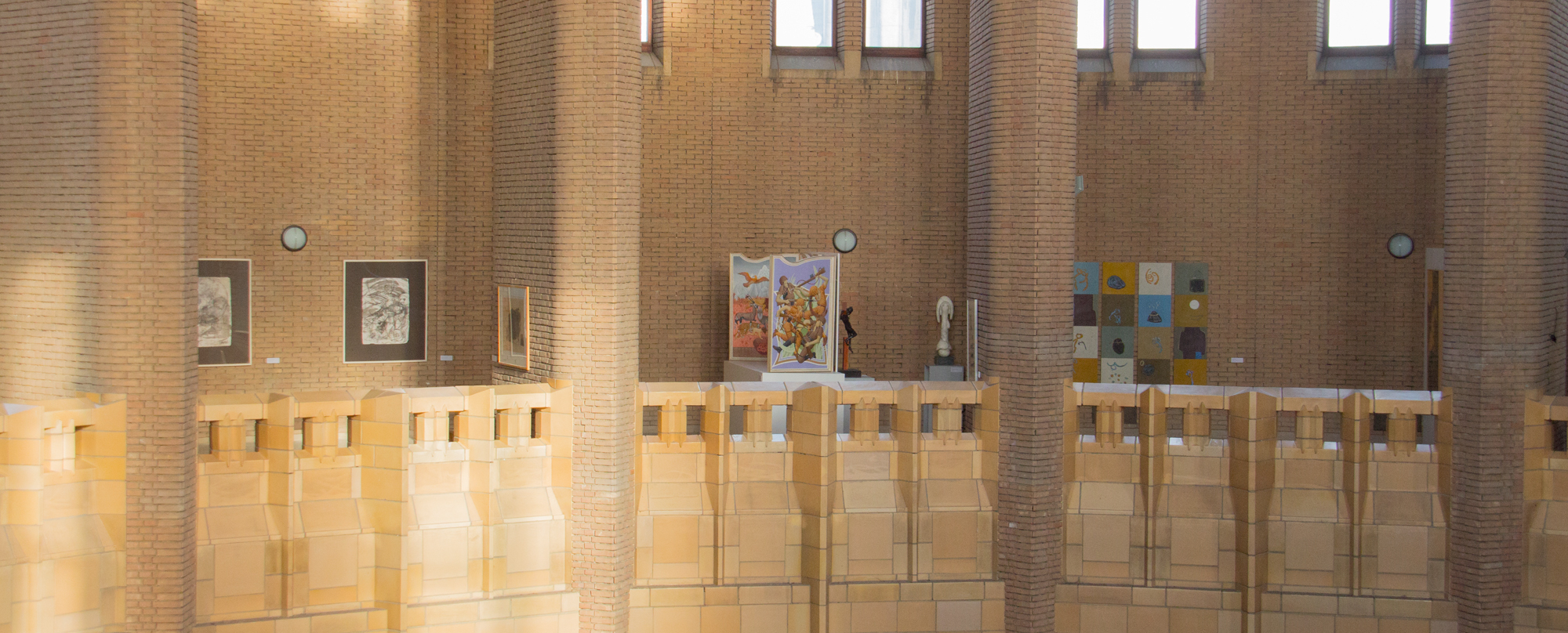
The virtuosity that Albert Van huffel (1877-1935) displays in his sketches is unprecedented. Dozens of variations for the towers, just as many design sketches for the main dome, different models for the panels of the balustrades, very realistically detailed watercolours of the Art Deco interior of the Basilica. Van huffel sketches his dream basilica in all possible forms, from a dome in the shape of a ziggurat, where one can walk on a sloping path to the lantern, to the entire urban development in the surrounding park landscape.

Everything was creatively worked out down to the smallest detail in over three hundred sketches, from which the museum selected about fifty. The originals from the Albert Van huffel Archive, Design Museum Ghent collection, are mostly small-format. Because these sketches are all true works of art, they were enlarged especially for this exhibition. The typical spirit of the time and the specific character of Art Deco only become clear in the sketches. They illustrate the architect's own and very personal thought and design process. He saw the Basilica as his Art Deco total work of art: drawing as design thinking. The exhibition sheds a completely new light on Van huffel's first dreams for the realization of what became one of the five largest churches in the world and the largest Art Deco building.

In this exhibition, in the context of the Art Deco year 2025, Albert Van huffel's sketches are confronted with works from the MMRK's own collection, the collection of the Glazenhuis and with works by contemporary artists Karel Breugelmans, Johan Creten, Maria Kley, Mehdi-Georges Lahlou, Daniël C. Müller, Renato Nicolodi, Denys Shantar and Felix Stöckle. Some also provide an insight into their own creative process with a preparatory sketch.
In collaboration with galerie Almine Rech, Brussels and galerie Transit, Mechelen. The exhibition is curated by Jos Vandenbreeden.

For more images click here:  https://transit.be/sketching-for-the-basilica-30-03-2025-31-03-2026/ 

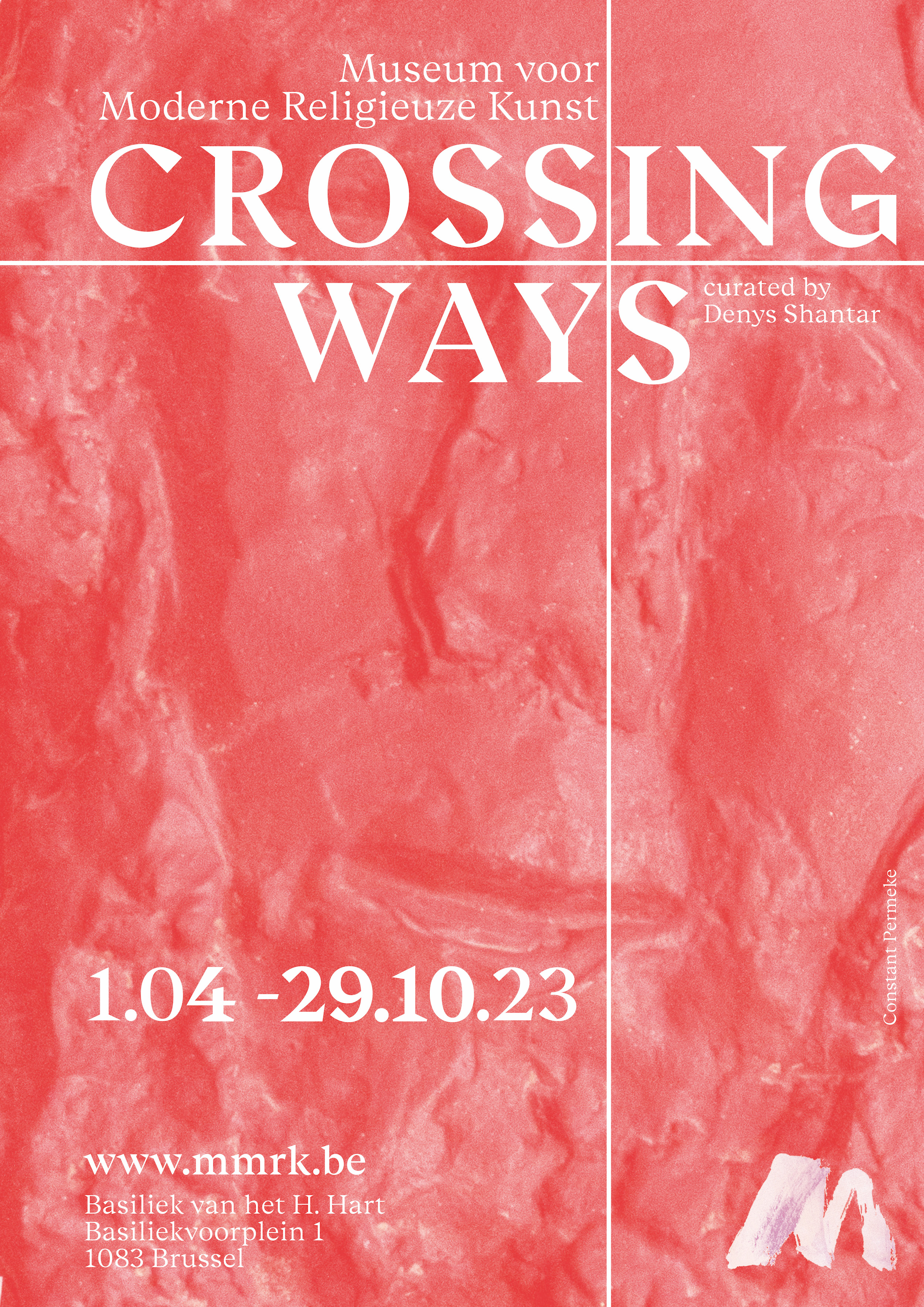
van 1 april tem 29 oktober 2023

De traditie van de Kruisweg begon als een bedevaart in Jerusalem, van de plaats waarvan wordt aangenomen dat het de ambtswoning van Pontius Pilatus was tot aan de laatste statie op de Calvarieberg. In de 19e eeuw werd de laatste dag van Jezus als mens op aarde, als een belangrijk element in veel Westerse Katholieke kerken. In sommige kerken werd de verrijzenis toegevoegd, als een niet-officiële 15e statie.

CROSS-ING WAY-S is een heel persoonlijke en intiem te beleven reis. We kunnen zelf beslissen wie we zijn.

Zijn we toeschouwers?

De moeder die haar kind ziet worstelen?

Zijn we Simon of Veronica die een helpende hand toesteken?

Of zijn we de lijdende Jezus zelf?

Het maakt niet uit wie we kiezen te zijn, we verwachten allen een wederopstanding; uiteindelijk zijn we “het zout der aarde”.